
When placed correctly, sandbags can reduce the impact of flooding on your home or business.
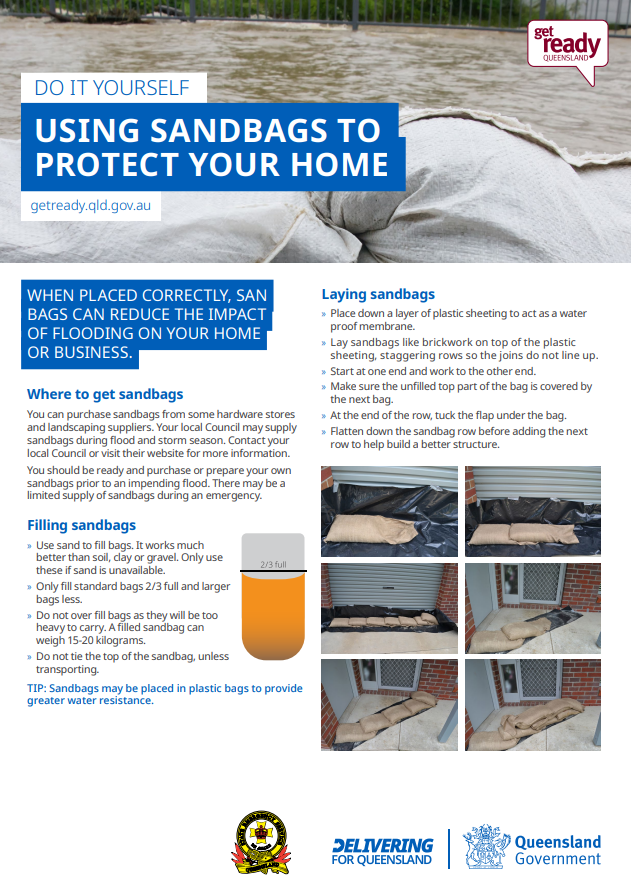
When placed correctly, sandbags can reduce the impact of flooding on your home or business.
You can purchase sandbags from some hardware stores and landscaping suppliers. Your local Council may supply sandbags during flood and storm season. Contact your local Council or visit their website for more information.
There may be a limited supply of sandbags during an emergency when significant flooding is occurring. They may only be issued by Council or the State Emergency Service (SES) on a case by case basis. You should be ready and purchase or prepare your own sandbags prior to an impending flood.
Self -inflating sandbags are a ready-to-use, light weight alternative that don’t require filling. They will self-inflate when they come into contact with water and can be stored a longer time than hessian sandbags.
Tip – Sandbags may be place in plastic bags to provide greater water resistance.
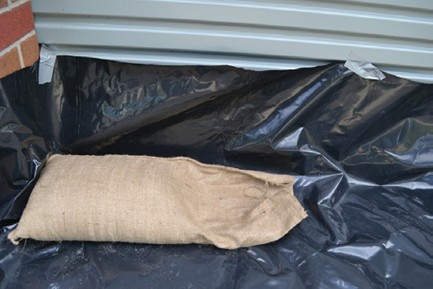
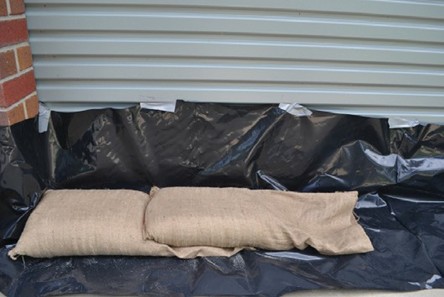
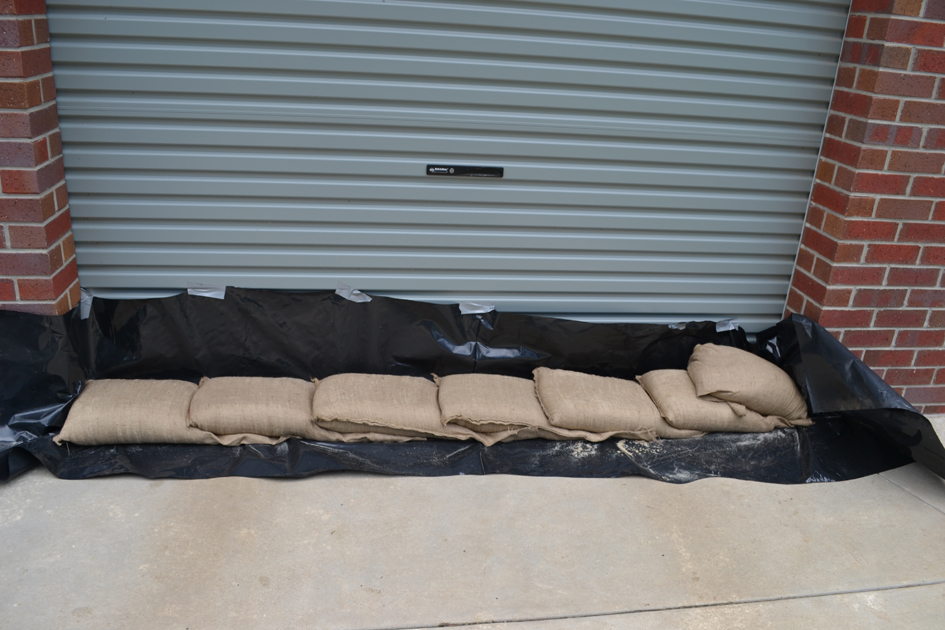
Most standard homes and buildings on a concrete slab can be protected with less than 25 sandbags. Sandbags will not stop the water completely but can reduce the amount of water entering your property.
It’s not always necessary to place a sandbag wall around the whole building. It may only be needed if the house is on stumps or constructed of timber or fibro sheeting. Sandbags can be placed to redirect water rather than keeping it out altogether.
Before building a sandbag wall, consider how you will remove floodwater that could become trapped between the sandbag wall and your building (e.g. pump, siphon, or bailing bucket).
If keeping a stock of sandbags, store them in a dry place out of the sun. Wet or damp sandbags can rot. A sandbag made of polypropylene can be stored longer than a hessian sandbag.